
Or, how to daydream again
Hopefully, my last article convinced you of the importance of boredom for creativity. If not, allow me to bring a little SCIENCE! to bear on the situation.
Studies at the University of Lancashire show that boredom increases creativity by leaving room for day-dreaming. Other studies by consulting firm Ernst & Young discovered that resting and giving time to do nothing gives you energy to accomplish more. It’s even been found to make you happier, and Lord knows that most writers could stand to cheer up a little bit.
All to say, we would do well to be a little more bored. It was easier for our illustrious penmonkey ancestors, who didn’t have TikTok, 24-hour news, and Royal Match. But that doesn’t mean we can’t exercise these mental muscles and reclaim daydreaming.
With that in mind, here’s my five-step program to get more comfortable with boredom and make room for great ideas.
Where Do These Ideas Come From?
Most of the ideas in this article are inspired by Cal Newport’s work, specifically his books Deep Work and Digital Minimalism. A computer science professor by trade, he’s written several books about how our current world often seems designed to thwart real creative work (what he calls “Deep Work”). More importantly, his books contain insights on how to fight back against that distraction
In my early to mid-30’s, my ADHD finally caught up to me. I’d been outrunning it by being smart enough to pull together the answer at the last minute and fix problems my inattention had caused. But that wasn’t enough. I started struggling to keep and find work as I gained more responsibility.
Cal gave me the weapons and tools I needed to fight back and make my brain work for me, instead of the other way around. Few people have influenced the way I think about work and focus than him. Part of the reason I started this blog was in the hopes of highlighting these techniques to someone who needs it, just like I did.
If my ideas about focus in writing interest you, you could do far worse than to pick his books up, especially his latest work, Slow Productivity.
1. Use Progressive Boredom to Exercise Your Focus Muscles
Chances are, your boredom and daydreaming muscles are atrophied from under-use. Be honest — how long does it take for you to reach for your phone when you stand in line at the grocery store?
To combat this, we’ll borrow a trick from weightlifting – progressive overload. The basic theory is that you build strength by gradually increasing the reps, weight, or frequency of your routine.

You don’t start by slapping two hundred pounds on your shoulder and doing some squats. You start with the bar, maybe even just your body-weight, and work on your form. This prevents injury, or in our case, discouragement.
So I won’t start by asking you to meditate for a full hour. We’re going to start small and build our way up, until you’re totally comfortable living in your head again.
This may be frustrating, I know. But no change is made instantly. Only through small, gradual adjustments can you actually improve yourself and keep it. As writer William George Jordan said: “Nature is a thorough believer in the installment plan in her relations with the individual.”
2. Put Your Phone Away to Reduce Temptation
The first step to any of these practices is to make them easier on yourself and put away your phone. Many studies have shown just how effective our devices have become at distracting us. Especially if you’re early on your journey, it’s probably best to remove temptation.
Don’t feel guilty if it’s hard. Very clever engineers have worked very hard to make phones distracting. There’s an endless sea of content, always another video just a swipe away.
For these exercises, I’m going to encourage you to either leave your phone OR put it somewhere hard for you to get. If you’re worried about not being connected 24/7, well, that’s part of the problem, isn’t it?
If you’re worried about emergencies, let me pose a hypothetical for you. How many likely situations can you think of where you answering the phone immediately (within the hour) would make a material difference?
I tend to leave my phone on my desk in a paper holder, behind my journal. When I’m out and about, I put it in the back pocket of the cross-body bag I bought for my honeymoon in Japan. The hardest pocket to access.
You might argue it makes me look like a dork. I counter that my Teenage Mutant Ninja Turtles button-down shirt is doing way more nerdy heavy lifting than that. It forces me to stop and think before I reach for my phone, and that’s all I’m asking you do.
3. Start Small With a Boring Chore
Starting small is simple, but not necessarily easy. Pick a chore that you currently do while doing something else. For example, washing the dishes while listening to a podcast or data entry with a true crime YouTube video on the side. Whatever makes most sense for your life.
Your first homework is to stop distracting yourself while doing that task. Wash the dishes, and do nothing but wash the dishes. Enter data with nothing else to occupy your mind but the spreadsheet. No podcasts, no YouTube videos, no music, nothing. I’m not going to lie to you, hypothetical reader ghost. This is going to suuuuuuck, at least starting out. I know because I did it, and it sucked.
I’m not going to lie to you, hypothetical reader ghost. This is going to suuuuuuck, at least starting out. I know because I did it, and it sucked.
I used to listen to NPR’s Up First podcast while shaving. To properly set the scene, you have to understand that I shave with a little brush, a bowl, and a safety razor. Because I am a Grade-A weirdo.
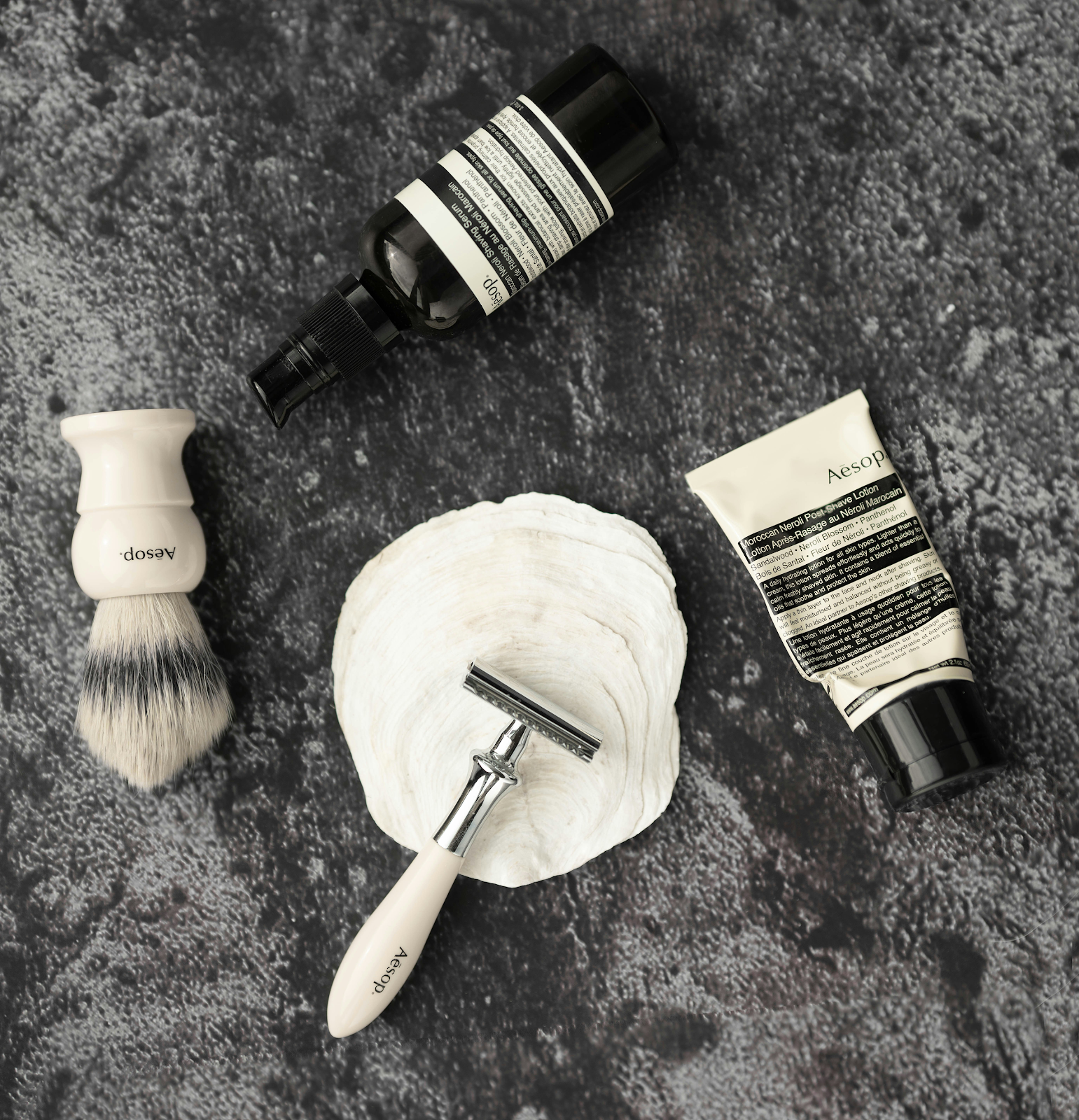
Taking that Up First podcast away from the routine was… hard. I had nothing to distract my brain, which typically runs at incredibly high speeds, during a long, tedious task. There was just me, the mirror, and the razor.
But you know what?
There are a lot less knicks and cuts when you aren’t trying to distract your mind. Less weird patchy missed spots. After a week, I hardly noticed the absence because the process wasn’t as long as I thought it was. I was just so accustomed to having something to distract me that a minute and a half felt like half an hour.
This won’t help your writing overmuch, but it will prep you for the real work that starts outside your front door.
4. Take a Walk to Clear Your Head
When I was in film school, my now ex-girlfriend adopted a very sweet Pitbull puppy named Cass. I told this to Scott Thompson, one of my screenwriting professors at Boston University. He said this:
“Dogs are great for writers. They get you out of your head, they remind of what’s really important, and taking them for walks is a great way to work out story problems.”
These days I have two cats. They’re wonderful for getting me out of my head and reminding me of what’s really important, but they don’t need to be taken on walks, so I have to do that myself.

Great thinkers and writers throughout history have used walks to help them break through problems, from J.R.R. Tolkien to Carl Jung. The secret behind this is that a walk is the perfect place for a kind of directed boredom.
On a good walk, you step away from anything that could distract you. Working on problems and imagining new worlds is hard — your brain would almost certainly like to focus on anything else. So go somewhere that’s not an option.
You could be directly pondering a question, like “How do I bridge the A-plot and the B-plot in this scene?” Or could you let it percolate in the background as you take in the world around you.
Either way, it cuts off your ability to distract yourself. It frees up your mind to focus or play as the need arises. Cal Newport calls this “Productive meditation”, and as a sometimes Buddhist, I like that.
Even if you don’t have a specific issue to ponder or world to build, you will see and hear the most amazing things on your walks.
Conversations overheard at traffic crossings show how people think. Unusual sights, like a violin leaning against an open door, inspire explanations as to what caused this. Mysteries, like the hedge of bamboo and trees that blocks off the empty lot next to the elementary school from sight, remind you there is still wonder in the world.

All that and a nice bit of physical movement, which most of us could stand to do more of. I’m looking at you, hypothetical reader ghost. Just because I killed your corporeal form in the last blog post doesn’t mean you shouldn’t get moving.
Your homework for this section is to take a walk. Start small — fifteen minutes. Work your way up to an hour. If you live somewhere it’s safe to do so, just step out your day and pick a direction. If you don’t, look for a nearby park or a school track. They’ll often let people use them during the day. If you live in an oven masquerading as a neighborhood, like I do, take a turn in your nearest mall and bask in the air conditioning.
Regardless of WHERE you walk, leave your phone elsewhere. And maybe put on some sunscreen. Sunburn does nothing to help you have good ideas.
5. Practice Niksen for Mental Heavy Lifting
You took my advice and put your phone away.
I’m proud of you.
You’ve done some chores with nothing to distract you.
Badass.
You’ve taken dozens of walks around your neighborhood.
Accept my highest of fives, hypothetical reader ghost.
Let’s slap some big weights on that metaphorical squat bar. I want you to practice niksen.
Niksen is a Dutch word that means, essentially, the practice of doing nothing. It challenges you to just sit, do nothing, and be. Let your subconscious bring up whatever it wants to. Nothing to fight, nothing to distract. No music. Just yourself.
I first read about this idea in Primer Magazine. On paper, I love this idea. In practice, I’m afraid to try it. The idea of doing nothing for an hour — not even moving — is daunting to my ADHD brain.
But I just spent the last 1,500 or so words yelling at you to get better at being bored, so it’s time to put my money where my mouth is. Between now and the next blog post, I’m going to practice niksen.
To practice with me, grab a notebook and a piece of paper and just sit somewhere for an hour doing nothing.
Heatwave permitting, I plan to practice this on my balcony next Monday. But if it’s too damn hot, I’ll happily escape with my notebook to a coffee house and leave my phone in my glove box. The location doesn’t really matter.
All that matters it the not doing.
I’ll see you next Friday and let you know how I did.
 Patrick Regan
Leave a comment