
Or: What the failure of the original Super Mario Bros. movie can teach us about life.
I noticed the other day that most of my posts so far have been about creativity and where ideas come from. In essence, it’s been very fiction-forward. Let’s switch gears from fiction and screenwriting inspiration to the art of copywriting.
One of the most important aspects of copywriting is understanding the brief. And since I believe lessons from one form of writing are applicable to other forms of writing, it follows that one of the most important aspects of writing in general is…
Well, understanding the brief.
Wait, crap, this post will actually touch on other kinds of writing?
Yes, hypothetical reader. That is, in fact, the entire point of this blog.
What Does Understanding the Brief Mean?
“The Brief”, in this context, is a quick summary of the important details and deliverables for a client. For example, if you work at a marketing agency, you might be given a brief detailing the client, what they make, their audience, what they want to do, and the deliverable you owe them.
Most of my work as a copywriter has been in-house. In that context, “The Brief” probably isn’t called a brief. But it’s the key facts about your employer that you use to write copy. Depending on how big or sophisticated your employer is, it might already be written for you or part of your job is to develop it.
As a freelancer, I build the brief anew with every client. I have a questionnaire for them to fill out, but I also spend a lot of time asking questions and talking to them. I want to find out who their target audience is, what their problems are, and how my client’s product solves those problems.
The brief is important because the job of any copywriter isn’t to come up with a beautiful, creative, original idea. It’s to satisfy the brief. The client wants something, and you need to deliver it.
I don’t care how clever, beautiful, and original your copy is. If it doesn’t satisfy the brief? You’ve failed.
Now, sometimes, satisfying the brief means giving them what they need instead of what they ask for. If what they need is to reach young people ages 18 – 25 but are asking for a radio ad, satisfying the brief means pointing out that the 18 – 25 age bracket doesn’t listen to a lot of radio.

Now, this doesn’t mean you can’t be creative in your copywriting. If doing this was easy, they would have done it themselves. The client is relying on your insights into their audience and your creative flair to create a new message that reaches that audience.
The audience is who you’re writing for. Not your boss. Not the English professor who gave you a D – you want to impress. Not even you. Especially not you. Copywriting isn’t about you.
Now it’s time to twist the narrative and apply this lesson outside copywriting. Because fiction, screenwriting, poetry, every other form of writing?
Not about you either.
Writing Isn’t About You
No, seriously. Writing isn’t about you. It’s about the audience. The brief, as always, is to the audience.
This is most obvious if you’re screenwriting on assignment. The studio has hired you to write a specific story and have provided IP, attachments, and guidelines on the kind of story they’re looking to tell.
If Marvel has hired you to write a brilliant Fantastic Four movie about family, discovery, and the importance of humility – your job is not to write a Fantastic Four movie about body horror and the fact that Doctor Doom was right.
I don’t care how brilliantly written a story that might be – it wouldn’t satisfy the brief. You are not doing what has been asked of you, and you’re probably not telling the story the audience expects to hear.
Now, hopefully, if you have this job, you WANT to write a brilliant Fantastic Four movie about family, discovery, and the importance of humility. Otherwise, something has gone very wrong in the hiring process and your own decision making.
But it does happen, and it pretty much never works out.
The best example of this I know of is the original Super Mario Bros. movie they made back in the 90’s starring Bob Hoskins, John Leguizamo, and Dennis Hopper.
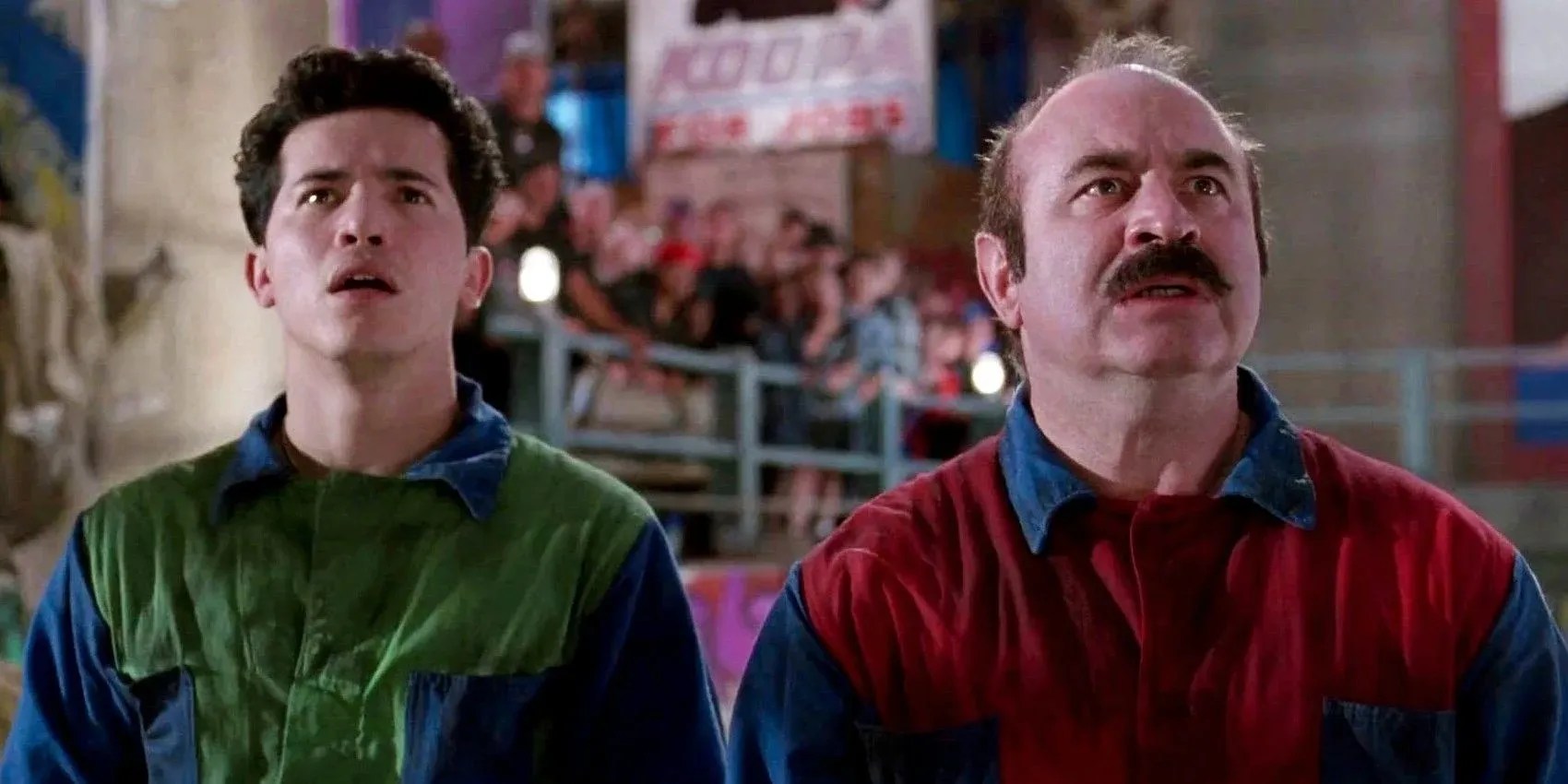
If you’ve seen the movie, you’re already nodding your head knowingly. It’s a baffling mess – a weird story about parallel dimensions, dinosaur evolution, and a cyberpunk dystopia. Toad isn’t a mushroom man, he’s a… de-evolved human that evolved from dinosaurs so he turned into a kind of human/dinosaur hybrid?
Look, hypothetical reader, I’m not doing this justice. Watch this trailer instead.
I know, right?!?! And the funny thing is, it’s not like the people involved weren’t talented. One of the producers had an Oscar, one of the writers made Bill and Ted. The directors directed the Max Headroom Show!
So what happened?
Simple: They failed to understand the brief.
The story, at least according to Hollywood legend, is that the filmmakers came to the production company pitching an idea for a dystopian cyberpunk movie. The kind of thing you’d expect from the creative voices behind Max Headroom.
The production company turned them down but offered them a chance to make the Super Mario Brothers movie instead, which they had the rights to.
I do not know why they did this.
The filmmakers agreed.
This decision I can understand. Mario wasn’t as huge as he is now, but he was still a huge cultural figure. Making the movie adaptation would be a huge opportunity for any young filmmaker.
But instead of delivering on the brief, they decided to turn the Super Mario Bros. movie into their cyberpunk dystopia.
Why? No idea. If I had to guess, though, it’s because they really wanted to make their cyberpunk dystopia and really didn’t want to make a Super Mario Bros. movie. The movie was a critical and commercial bomb.
Because they made it about them.
Don’t Be Afraid to Walk Away
In your writing career, you’ll almost certainly have to work on things that you’re not passionate about. You can find a spark of interest, but it’s not what you would personally do if given total creative freedom.
That’s fine. In fact, embrace it – very few of us get through life without having to do boring work we don’t care too much about. As long as it’s not unethical, there is no shame in supporting yourself or your family.
Sometimes the client won’t understand the audience. You can try to pitch them on a different idea – to not try and reach 18 – 25 year olds with a radio ad. But if they don’t listen, then you have your brief.
If you can’t do that brief, whether to do disdain or deep apathy? Like, you really can’t do the brief?
Be willing to say so and walk away on good terms. You do no one anyone favors trying to satisfy a brief you can’t satisfy. Not the client/producer, not yourself, and definitely not the audience.
Because, and I cannot stress this enough, writing is about the audience. Not about you.
Writing on Spec
The other side of this coin is writing on spec, or speculation. That’s when you’re writing a piece with no promise of money, but with the speculation that you can sell it. Almost all fiction is written on spec and a great deal of screenwriting.
When you’re writing on spec, it can feel like it is all about you. After all, you’re writing for yourself. You’re making the movie you want to see.
Well… yes. And also… no.
You might think I’m about to tell you to study the market and write for it. Chase the trend of vampires or dinosaurs or high-brow horror movies.
I am not – writing for the market is a fool’s game. The damn thing changes constantly, and it takes so long to write anything that by the time you finish, it’ll be different anyway. Plus, it’s doing a disservice to the audience. The brief is to satisfy the audience, and the audience wants to hear what you have to say, not what you think they want to hear.
I am, in fact, telling you to write what you love. But I’m also telling you to understand that when you write on spec, you’re not writing for yourself.
You’re writing for the audience.
Tell Me a Story
It’s right there in the name. “Storytelling”. All writers are storytellers of one degree or another. Journalists and non-fiction writers tell a story of what happened. Fiction and screenwriters spin falsehoods that reflect truths.
Even we copywriters are storytellers. We tell the story of our product, or more accurately, we tell the story of how our client’s lives will improve with our product or service.
And intrinsic in the name “storyteller” is that we’re telling it to someone else.
Now I want to be clear, here, because I can see the hypothetical readers coming at me. If you’re writing for just yourself, telling yourself a story, that’s not a problem. I do that all the time. I’m an avid journaler and I like to start my morning by writing whatever’s in my head. If I’m not working on anything in particular, that’s often from a prompt or a dream.
But that is not storytelling. You need to be honest about that. If you’re writing for yourself, accept that no one else in this world will see it and no one else needs to understand it.
If you’re writing because you want to share this story with the world, you owe it to the audience to think of them when writing it. They want to hear what you have to say, but you owe it to them to tell them it in a way that makes the most sense to who you’re talking to.
Writers have a reputation for being solipsistic. Narcissists who are focused on expressing only their thoughts. That’s us at our worst.
At our best, we’re the friend who returns from a vacation, grabs you, and sits you down because “I have to tell you what I saw over there.” We paint a picture with our words, not because we want you to be impressed by us, but because what we saw was so amazing everyone needs to know about it.
To take a photograph is to say “This moment, this image, deserves to be immortalized. To be seen by others.” To write a story is to say “This story is amazing, horrific, tragic, or just useful. It is real. It deserves to be read by others.”
So understand the brief. Write what you’re trying to write and know who you’re writing it for. Whether it sells or not, you will at least know that you didn’t fail the brief.
 Patrick Regan
Leave a comment