Some years back, fellow writer Tilly Bridges referred to me as “Edgar Allan Poe with the heart of a Starfleet Captain”.
(The context was that she was GMing a Star Trek RPG where I was playing as the Captain.)
I thanked her for the compliment, and we moved on. But the truth is—and I’ve never told her this until now—that description stuck with me. Even when not at the top of my mind, it kept running in the background processes of my brain. What did that mean? It felt right, it felt accurate, but what does it mean to be these two very disparate things? How did I sell myself as a writer when having to explain this massive contradiction?
After all, if you’re explaining, you’re losing.
I reread Stephen King’s On Writing earlier this year. In it, the master of horror mentions that he is an optimist at heart, who believes in humanity’s capacity for good and love.
If the King could resolve that contradiction, then my growth as a writer depended on me doing the same. I’ve spent a lot of time thinking about it as I worked this year, including on one of the most personal and, in some ways, cynical specs I’ve ever written.
I think I have an answer now.
Please Allow Me To Introduce Myself
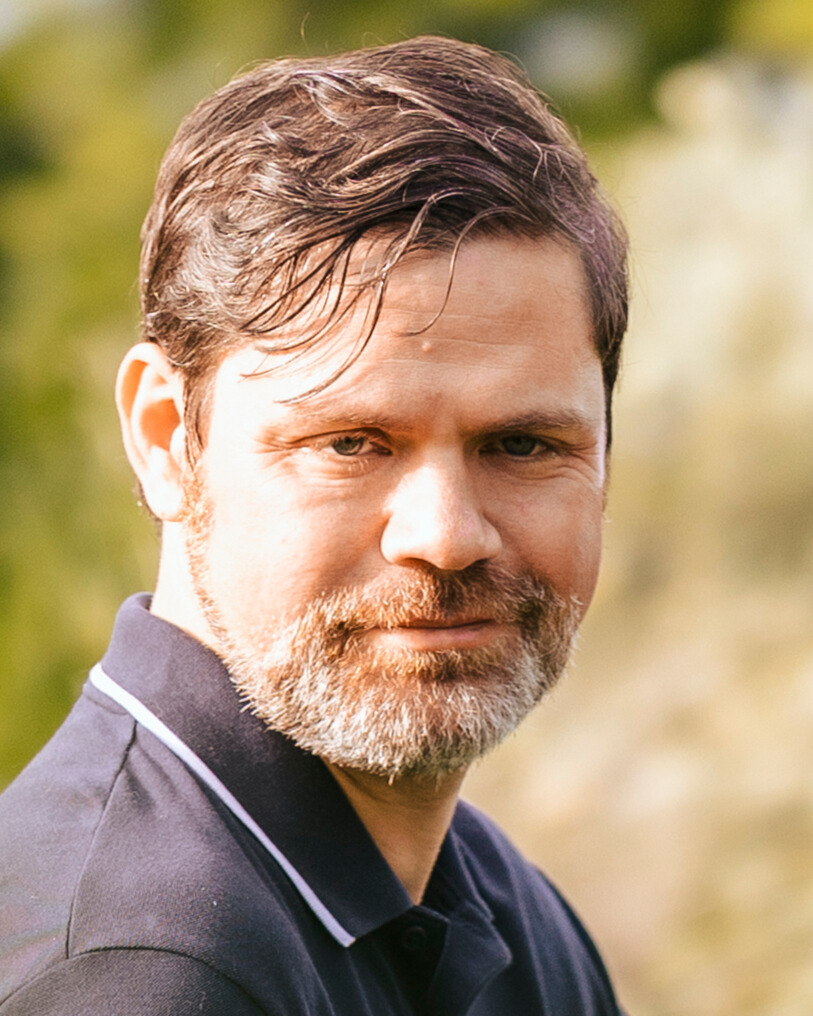
My name is Patrick Regan. I am one familiar with the terrible things that stalk and haunt the abandoned alleys, moonless nights, and decaying corpses of the world. I know ghost stories of all kinds, monsters of every stripe, and liminal spaces of such cosmic horror that they would drive any sensible person to nihilistic despair.
But don’t be fooled by this costume of fear. It’s just a costume, after all. A lie, or at the very least, only a partial view of me. Push past the dark academic stylings, crack open my ribcage, and tear through the viscera of my guts. Amid the twitching muscle and stretched eniew, you’ll find a beating heart that tells a different story.
I spent an hour reviewing ways to say what I fundamentally believe about humanity. Went back to Tolkien, my favorite episodes of Star Trek. And finally, I realized that no words I say are going to do it as beautifully or succinctly as James Gunn through the mouth of Clark Kent.
That? That is beautiful, poetry even. At his best, Superman should be written as thinking humanity is one of the greatest, most inspiring things he’s ever seen. One of my favorite Batman/Superman moments is the revelation that Superman thinks Batman is better than he is.
Our strength as a species is not our compassion or our knowledge; it’s our capacity to get up after we fall and keep pushing forward in the belief that we, and the universe, can be better.
How does this optimistic view of humanity square with all the dead things I fill my life with? With the murder and the monsters, and the uncaring universe that can kill us without any malice at all?
On Fear and the True Nature of Courage
Space is fucking scary. No franchise understands this better than Alien, where the environment is as much a threat as the Xenomorph or Weyland-Yutani.
In the first movie, the Xenomorph’s most terrifying trait isn’t its reproductive cycle, claws, stealth, or speed. It’s the acid blood. They can’t shoot it, they can’t just kill it. If they do, the blood might cause a hull breach. Explosive decompression occurs as the vacuum of space is let in, sending the crew to their death in nothing.
What’s the most common method of climactic Xenomorph disposal? Shooting it out of the airlock into the cold, harsh vacuum of space. Or in one notable case, into an orbiting ring of rock – even the space around planets is terrifying.
Why is Weyland-Yutani SO obsessed with taking this clearly dangerous thing alive? Because we as a species were not built for space travel. We were not made to go to the stars. But maybe whatever makes this thing so scary can help get us there.
Alien is a horror franchise, designed to terrify. But even Star Trek, with its powerful ships equipped with the latest creature comforts, knows that space is not to be taken lightly. Vulcans, Klingons, Romulans, even Gorn or Changelings – these are all beings whose motives can be understood, even when they stand against us. Hell, each of them eventually became Starfleet’s friend.
But what about, say, the Borg? They cannot be understood. They cannot be reasoned with. They will tear through your defenses without really noticing. The dead will be fortunate. The living, the survivors, will have their identities stripped from them to join the hive. Their flesh mutilated and replaced with cold machines. The Borg are terrifying.
And yet…

Maybe they won’t always be. As Q himself tells Captain Picard upon introducing the Borg to the Federation:
“If you can’t take a little bloody nose, maybe you ought to go back home and crawl under your bed. It’s not safe out here. It’s wondrous, with treasures to satiate desires both subtle and gross. But it’s not for the timid.”
Or as the cliche goes, courage isn’t about the lack of fear.
It’s about action despite fear.
Brian Evenson said the following about horror stories, which I have always loved.
“Here, says the Horror writer, through their language, here is a door into the darkness. I have been through and have left part of myself on the other side. I am going through again. Will you come with me?
And then, only once you go through: I’m not sure I’ll be able to lead you out again.“
It’s that last piece of uncertainty that is key. Because fear is about uncertainty. Even if I’ve gone in before, I can’t be certain I’ll be able to get out again. Past experience is not necessarily a predictor of future results.
We can fly, and a fall from a great height can still kill you. You can scuba, and a shark can still maul you. You can trust and be rewarded for that trust, and the next person can still break your heart.
That doesn’t mean we slaughter all sharks.
That doesn’t mean we don’t reach for the stars.
We don’t shut out the world because we’ve been burnt.
The only way out of this dark room is courage. Real courage that doesn’t disregard or ignore fear. It doesn’t stand paralyzed by it. It feels it, stands up, and keeps moving. The only way out is always through the darkness to find the beauty.
You may still die, horror reminds us that the option is always on the table. But you will have died in the pursuit of truth. You will have died showing those who come after the way.
So let’s return to that question, that quote, from Tilly. I’m a Starfleet captain with the exterior of Edgar Allan Poe. How does that make sense? What does it mean?
Who am I?
I’m a man who approaches you with something to show you. Something wondrous and awesome, in the original sense of the word. It might change your life. If enough people see it, it might push us a single step forward on the path to a better place. Or maybe it will just entertain and amaze you for two hours in a dark theater, a place to rest on a long and weary road we all walk.
Regardless, I want to show you something true, hidden inside that darkness. I know it’s true because I ripped from me and left it there.
I lead you into that dark room, and as the door shuts and locks behind us, I will tell you that I’m not sure I can lead you back out again. However, if we can’t, I can show you how to leave a marker for the next person who comes in through this door.
The next explorers, stumbling forward towards the light.
Want to see what the means? Check out the first ten pages of my spec samples.
 Patrick Regan
Leave a comment