The Problem
When I was first hired on as Wrapbook’s Content Marketing Blog Editor, my first challenge was the blog’s flagging publication schedule. While quality remained best-in-class, we were only publishing two articles every two weeks. This low, irregular posting schedule damaged the content marketing operation in several ways:
- It created a gap in the middle of the funnel. Our weekly newsletters often lacked fresh content and were growing stale and repetitive. Naturally, this hurt retention and depleted our prospective lead list, as there usually wasn’t enough material to make it worth the potential customer’s time to stay subscribed.
- Our low posting frequency left many high-value keywords vulnerable to competition. We had some of the best writers and keyword research strategies in the field, but they were all gathering dust. Meanwhile, our competitors were already there, building search authority every day and growing harder and harder to knock off their thrones.
- The backlogged publication schedule meant freelancers sometimes had to wait for weeks to move their articles to the next step. This drastically slowed the regularity of their pay schedules and risked us losing the top-tier talent we’d worked so hard to recruit. No one is going to stick around if they don’t know when they’re going to get paid.
- The editorial calendar was so sparse that there was no planning, just “Whatever article is ready”. This was an enormous opportunity cost, as we couldn’t plant articles to coordinate with other marketing teams, such as new product launches or upcoming events.
The Cause
Due to internal IT security concerns, freelancers were not allowed into our internal project and task management system (Asana). Instead, details about article status and assignments were kept between various email threads and a Google doc. The doc required manual upkeep by the editor and, as a result, ran the risk of being out of date if something slipped. Details about specific articles were spread all over, slowing down the process with tedious searching and repeated back and forth with writers.
The Solution
For the company’s well-being and my own sanity, this could not stand. Inspired by Cal Newport’s Deep Work, I created a simple Kanban board in our Notion database. Due to Notion’s increased permission protocols, this resolved IT’s security concerns.
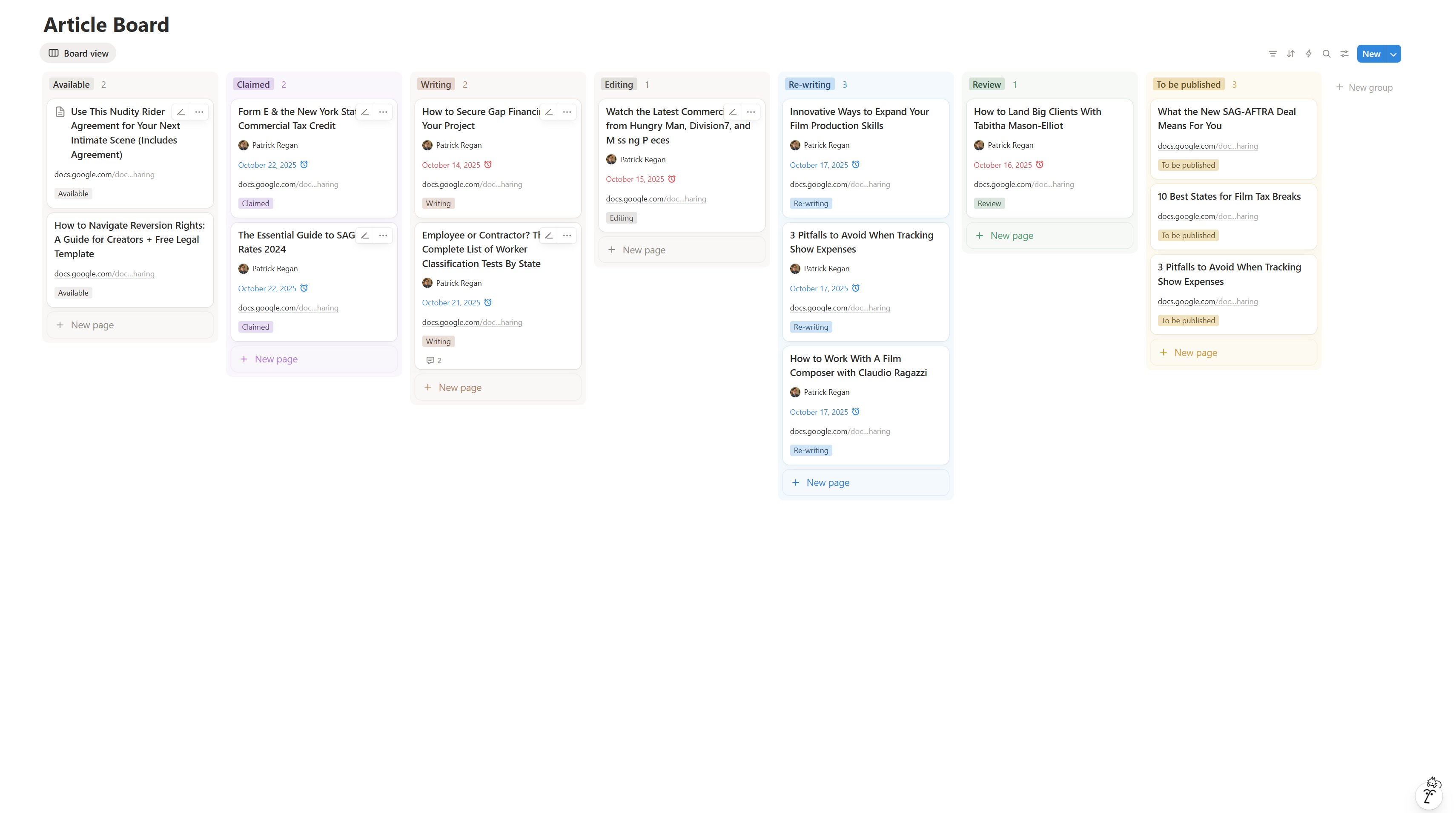
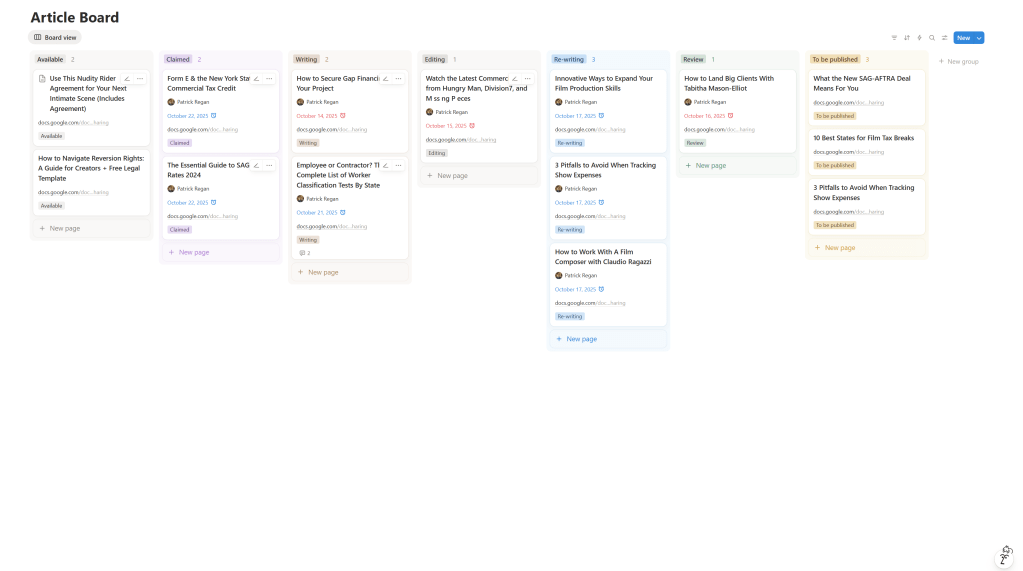
Caption: For privacy and company security concerns, this is a mock-up recreation of the board.
A single card represented each article, and contained a link to the draft, all relevant research (SEO and otherwise), and the next due date. I notified writers through an email list of new available articles, and they claimed an assignment by logging into Notion, labeling themselves the owner of a card, and moving it into the “Claimed” section.
Upon being placed in the Claimed section, the card automatically changed its due date to one week from the claiming. This indicated when the first draft was due. Once they started actually drafting, they’d move it to the “Writing” column. If the writer had questions, they asked them on the card so all discussion and information on the article was in a centralized source of truth.
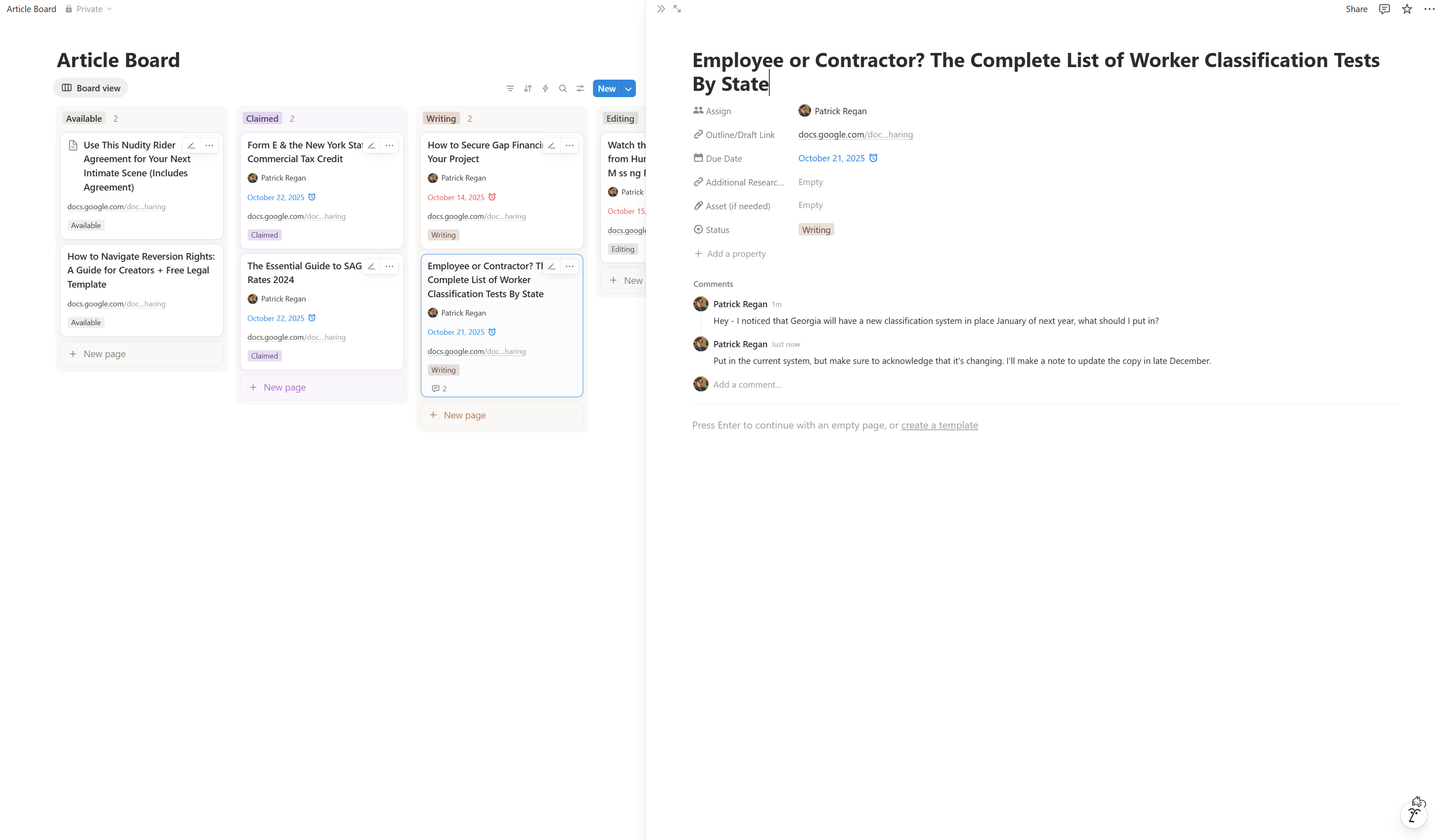
After finishing the draft, they dragged it into the “Editing” column, which automatically changed the due date to two business days from that moment. I’d edit it, move it to the second draft column, which changed the due date yet again, and so on through the process. Once it reached the “To Be Published” column, I would transfer it to an internal Asana template I devised to work with the graphics and website teams.
The system automatically emailed me anytime a card was commented on, when it was moved, or when the deadline was approaching or up. This kept me up-to-date on anything that needed my specific attention, while the Kanban format allowed me or any other member of my team to quickly get an overview of the entire situation at a glance.
Because so much of the process was either automated or handled by the freelancers (with minimal work from them), immense time was freed up for me to focus on my other duties, such as producing monthly (and eventually quarterly) publication calendars and creating blog optimization schedules.
The Results
Approximately two months after instituting this system, I successfully increased our content output from two articles every two weeks to three articles every week. We suffered no loss in content quality and continued to rank in the top five for target keywords with every blog.
Not only did we prevent the departure of any high-quality freelance writers, but we actually grew the team as word of our practices spread. The writers appreciated the clarity and speed of the new system, despite the minimal additional effort it required from them. They especially enjoyed the faster turnaround times for invoices.
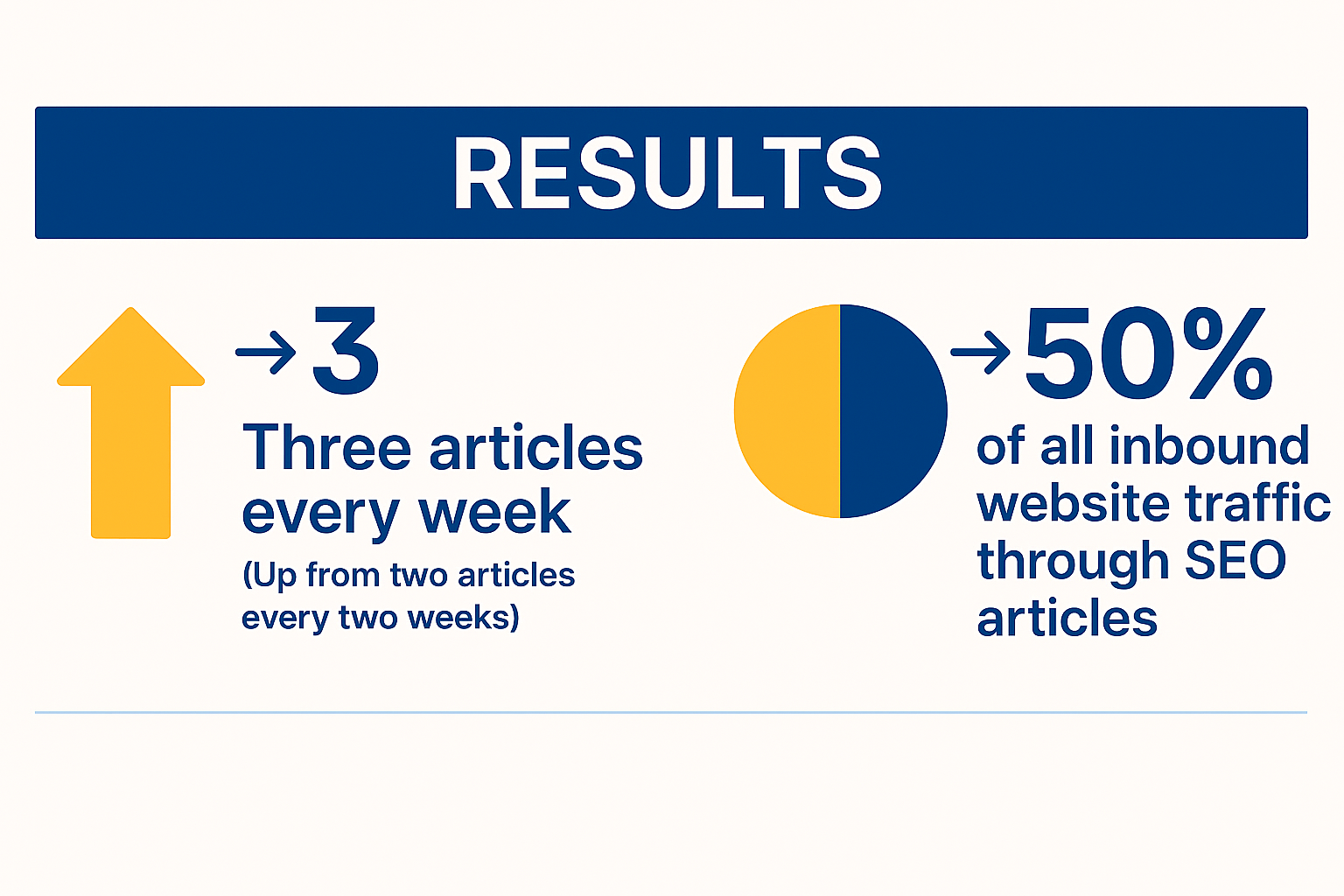
Newsletter retention improved, click-through rates rose, and eventually 50% of all inbound traffic was coming through our blogs. As I had more time to research and construct an advanced publication calendar, we were able to better support other marketing teams with related blogs. For example, the system allowed us to work quickly enough to produce a high-SEO article on the American Film Market ahead of our Event Marketing Team’s sponsorship of the event.
The Lesson
Content marketing isn’t all about data and creativity. Those are often the fun parts – everyone loves being creative, and it’s a delightful puzzle to figure out how to make the numbers go up.
However, to quote James Clear, “You don’t rise to the level of your goals, you fall to the level of your systems”. No amount of genius creation or highly scientific data analysis will do you a lick of good if you haven’t built the systems to actually execute on them.
 Patrick Regan
Leave a comment