My Role: Content Marketing Manager
Core Responsibilities: Campaign concept development, celebrity selection strategy, audience targeting, ad copy, performance analysis
Team: Collaborated with President Phil Rubin (strategy approval), Cameo for Business team (talent sourcing)
The Problem
How do you compete with Listerine’s century of brand recognition and nine-figure ad budgets when all you’ve got is a superior product and a great story? TheraBreath needed to break through the crowded oral care market without breaking our budget — or our brand voice.
We were the fastest-growing oral healthcare brand in the world. To maintain that growth and keep pace with the competition, we needed to find new ways to break through, so we turned to social media. However, we weren’t getting a lot of traction in either paid spend or organic content. The kind of attention-grabbing strategies that worked for companies like Wendy’s went directly against our brand image.
That image was based on our founder, Dr. Harold Katz, one of the most genial, knowledgeable dentists I have ever met. Picking fights or being controversial would have gotten us views, but it would have wrecked our brand perception without necessarily leading to conversions.
Experimentation with Instagram influencers had gotten us eyeballs, but the limitations of Instagram (no linking) meant we couldn’t track actual interest. Fortunately, we’d recently been gaining traction on TikTok during the COVID pandemic as “The TikTok Mouthwash”.
What we needed was an affordable, low-cost way to break through the crowd that still fit in with our brand voice and could be deployed on the fastest-growing social media platform.
The Opportunity
Enter Cameo for Business. At the time (2020/2021), Cameo for business was relatively new. But not so new that major agencies weren’t noticing it as a workaround for celebrity endorsements. We knew we couldn’t afford multiple celebrity endorsements or ad appearances.
But that was okay, because we didn’t want endorsements. Consumers on social media rejected overly polished ads and celebrity endorsements. They trusted authenticity and relatability.
At the same time, we wanted to reframe the conversation of halitosis. People didn’t want to even discuss solutions out of shame. We wanted them to know that there’s nothing shameful about bad breath. Everyone gets it.
Even famous people.
The Solution
“The Bad Breath Diaries”. I would source a collection of videos of celebrities talking about a time they had halitosis. If they were willing to mention TheraBreath in the process, that’d be a little extra on top, but the important thing was to get people to stop and hear how their favorite star also had stinky breath from time to time.
I was given a small budget to pilot the program and went to work. I managed the celebrity selection and targeting strategy. Cameo for Business’ team helped us source a diverse talent pool, including actors, athletes, musicians, and even a drag queen to share genuine, occasionally humorous anecdotes.
I shared these videos on our existing TheraBreath Facebook account, with a small paid spend (less than $2500 total) to reach beyond the existing audience to people who would be receptive to the message from each particular celebrity.
For example, we targeted a video from actress Jewel Staite to fans of Firefly, her most famous role, with a large, devoted fanbase. Meanwhile, we targeted a video of Olympic Gymnast Gabby Douglas at fans of the Olympics and professional gymnastics.
I wrote simple ad copy to accompany each post, suggesting that TheraBreath could help solve the problem and providing a link to a landing page with a discount. Given the nature of our product – mouthwash typically purchased in store – I was under no illusions of converting through this landing page. The goal was to gauge interest, which I knew from experience led to purchases when the customer was next in the drug store.
The Strategy
Depending on the success or failure of this initial pilot, we would continue down our four-phase campaign.
Phase 1: I piloted the program on Facebook and Instagram to test the concept. As mentioned before, I kept the paid spend minimal – just enough to get it in front of potentially interested audiences without really opening up the coffers.
Phase 2: I analyzed performance metrics (shares, engagement rates, and especially link clicks) to determine overall success: which celebrities and which messages were resonating the most.
Phase 3: To confirm that this content could return at scale, I increased the paid spend with successful content.
Phase 4: If greenlit, I would prepare expansions to additional celebrities and additional platforms, most notably TikTok, to capitalize on “The TikTok Mouthwash” momentum.
Between Phases 3 and 4, pharmaceutical giant Church & Dwight acquired TheraBreath in a $580M deal. They halted all new ad spend, regardless of success, as we were tasked to work on the transitional handoff to C&D’s internal marketing team.
The Results
TheraBreath had always struggled on social media, outside of the rare instances when public events aligned with our brand. We struggled to get more than one or two shares or over a dozen likes. The Bad Breath Diaries absolutely crushed it with spends of less than $350.
Two outstanding examples were WNBA player Lisa Leslie and RuPaul’s Drag Race contestant Brooke Lynn-Hytes.
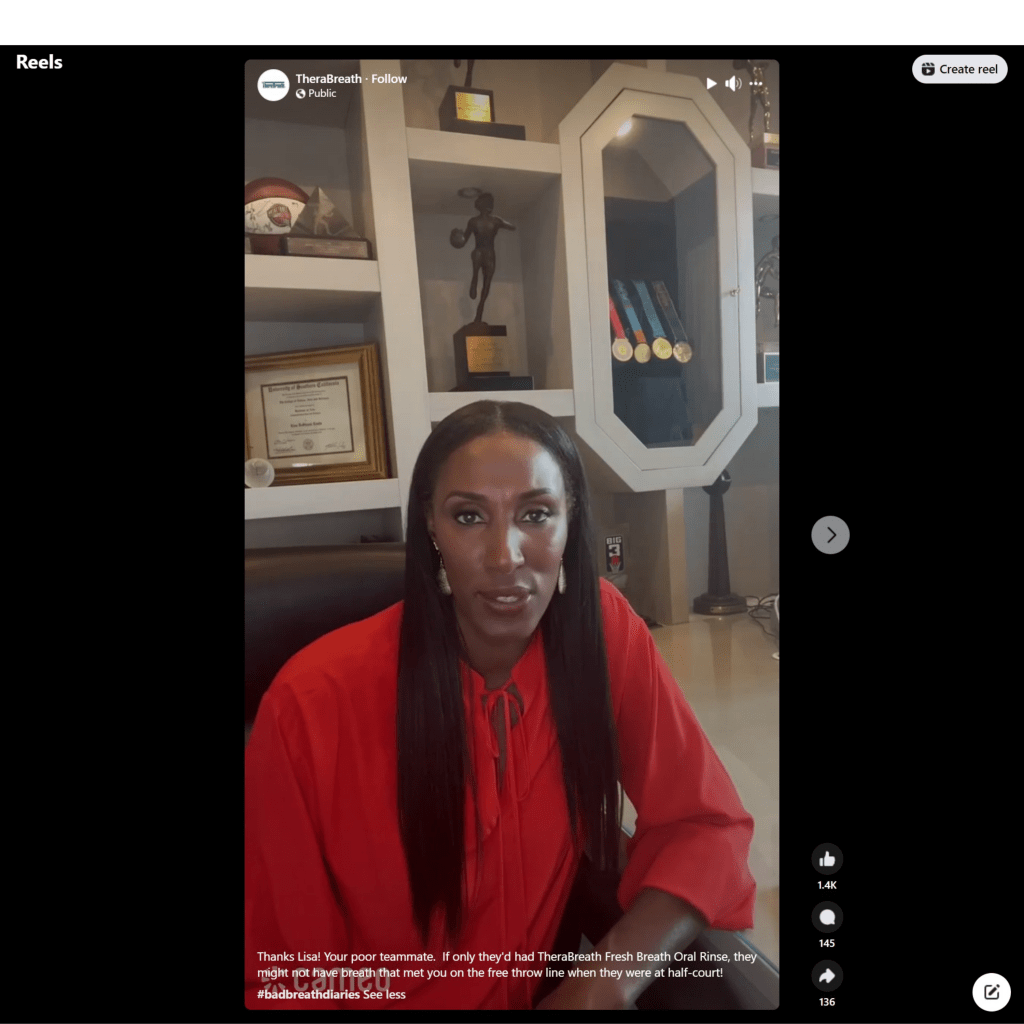
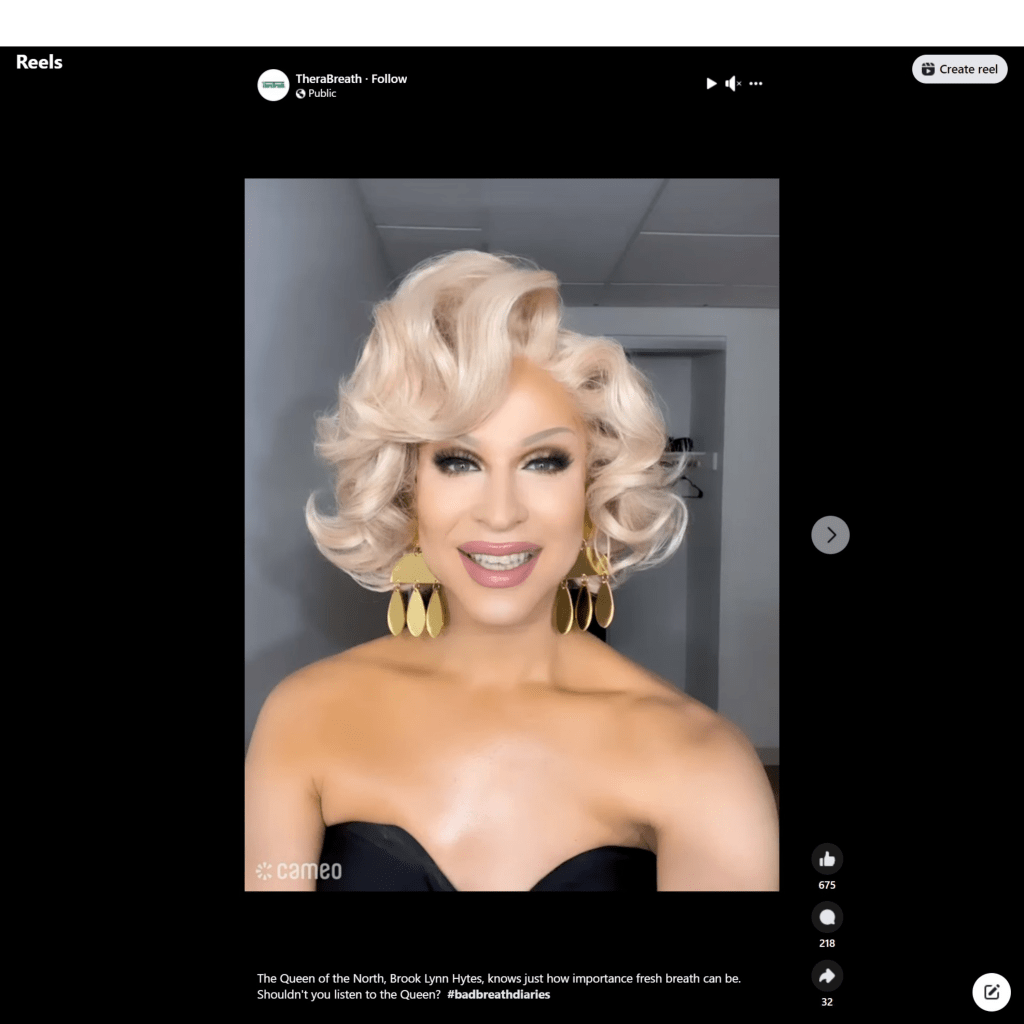
The high link click-through rates and organic sharing with an incredibly minimal ad spend more than proved the viability of Cameo for Business as a scalable celebrity content source. It broke through the noise without breaking the bank or our hard-earned brand voice.
While specific link click-through rates are proprietary, I can confirm that the ROI exceeded previous internal social benchmarks so thoroughly that leadership greenlit the Phase 4 expansion and increased budget allocation before the acquisition.
The Lessons
On social media, authenticity matters, and there is nothing more authentic than vulnerability. Having celebrities tell their truths built trust and interest faster than anything.
Social media is a firehose of information, and brands have to find a way to stand out and grab customer attention or risk being lost in the wash.
Brand voice consistency matters. Attention for attention’s sake doesn’t necessarily help, especially if it goes against what customers already perceive you to be.
Working with Cameo is cost-effective, although there is a loss of control. Not all celebrities quite understood the brief, and Cameo’s rules prevented us from asking for reshoots. This meant not all videos were as effective as we would have hoped. (I’m looking at you, David Hasslehoff.)
In the modern-day information environment, marketers have to be agile and pivot to where the audience is going (TikTok), without sacrificing the brand principles and voice that make the brand who they are.
 Patrick Regan
Leave a comment