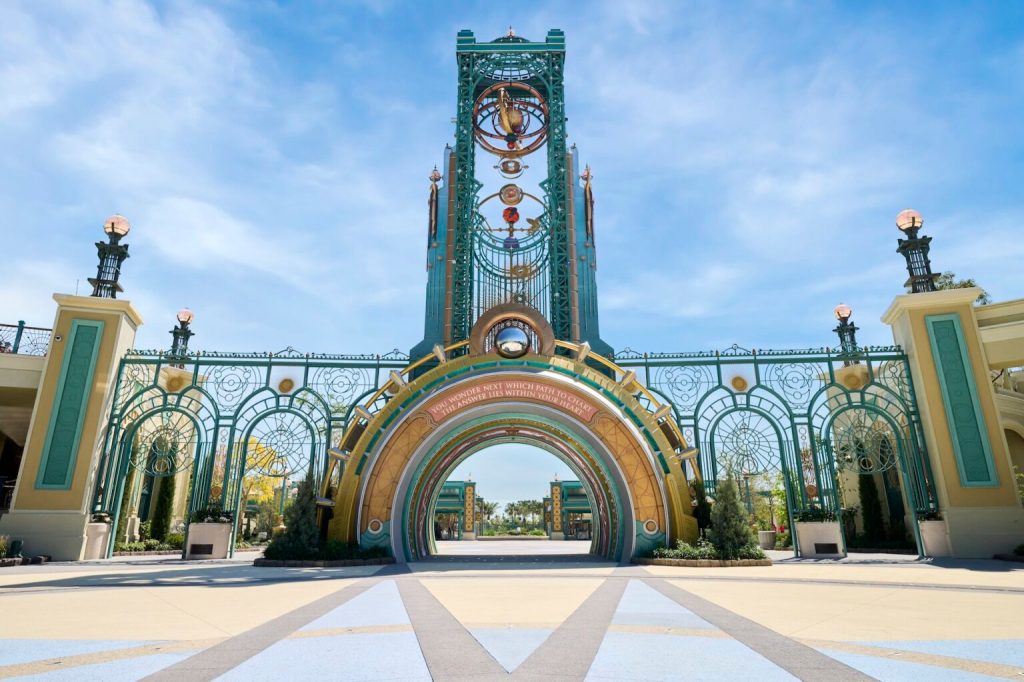
We stood outside a portal to another world—five other worlds, in point of fact. We’d woken up far too early for a vacation after a red-eye flight and then walked twenty minutes from our resort, bypassing the buses, all so we could be there for rope drop.
A half circle approximately 20 feet high. Detailed brown metal work with emerald green details. A tower of green girders rising from the top of the gate, housing four emblems of each world. Steampunk sculpture by way of the Belle Epoque.
Most important: the short verse written along the top of the portal’s arc:
“Beyond this gate find gardens green, and epic worlds to fill your dreams.”
My wife squeezed my hand and smiled at me. We’d both been talking about Epic Universe since it had been announced, but she’d decided on this for her birthday. We were here for her – I was just along for the ride.
The rope dropped. We moved with the crowd through the portal, ready to immerse ourselves in unbelievable worlds and thrill to the wonders within.
I couldn’t have imagined how much the portal would mean to us.
Why Portals?
The portal is mission-critical to Epic Universe’s design. It’s the identifying structure for the park, akin to Cinderella’s Castle at the Magic Kingdom, the Tree of Life at Animal Kingdom, or whatever Epcot’s weird golf ball thing is.
You can see this focus most clearly in the marketing campaign run-up to the park’s opening, where the portal was a keystone element. Take a look at these short video spots, for example:
To get this out of the way: Epic Universe is incredible. The greatest theme park experience of my life, so I’m operating on the presumption that the team behind it knew what they were doing and, by and large, intended every effect produced by their design.
So if we assume they intended to make portals the iconic structure for the park as a whole, they must have had a reason.
We must assume they understood and cared about transitions.
At its core, the theme park experience is disappearing into a special “other place” where you can leave your cares behind. No less a figure than Walt Disney himself summarized the mission statement of every theme park in his plaque welcoming people to Disneyland:
“Here you leave today and enter the world of yesterday, tomorrow, and fantasy”.
Image: Plaque. Caption: Hey, waiiiiit a second. Did the Epic Universe guys get the idea from this?
If the portal were just at the opening to Epic Universe, I would chalk it up to Universal wanting a centering structure for marketing and navigation purposes while the design team felt personally inspired by Walt’s words.
But it’s not just at the opening.
Epic Universe is made up of a central “hub world” called Celestial Park and four offshoot worlds. As the name suggests, Celestial Park is space-themed and contains the greatest carousel and roller coaster I have ever been on in my entire life. But for this article, it doesn’t matter. Because what really matters are the four other worlds.
The entrance to each world has its own portal, similar in design to the main portal. An icon representing the specific land (Mario on a coin) and a quote relating to the universe (“It’s alive! It’s alive!”).
You can’t really see the world from in front of the portal aside from a few of the taller structures in the distance. Focus is drawn to a tall, unique structure on the top of each portal instead.
Walk through the portal, and you’ll enter a tunnel with a colored electrical effect on the walls, as well as sound effects unique to the land you’re entering. The Mario portal plays the iconic pipe sound effect, while the Harry Potter portal – which is taking you back in time to 1920’s Paris – plays the ticking sound of a time turner pulling you into the past.
In all four cases, you have to take a turn around a barrier or a corner. In the case of Super Nintendo World, you have to climb an escalator.
And only then does the fullness of the land burst into view. The hub world has faded into the background, hidden behind the portal and the barrier, leaving you totally immersed in the world you’ve stepped into.
The work and craftsmanship the team has done to make each world feel unique and alive is unquestionable. Macabre trophies line the Burning Blade in Dark Universe, animatronic dragons pop up in unexpected places on the Isle of Berk, actors dressed as young wizards will ask you about your feed in Wizarding Paris, and Super Nintendo World is a literal game you can play.
And none of that would work at all without those gates.
To explain why, let’s take another look at the original Disneyland.
Everyone can name the famous rides. Some people can even name the B-tier rides. If you go a lot, you might even be able to map them out in the park. Turn right when you enter the gates to get to Space Mountain.
But I’ll bet most of you don’t think very much about the fact that all those rides are in their own specific themed lands.
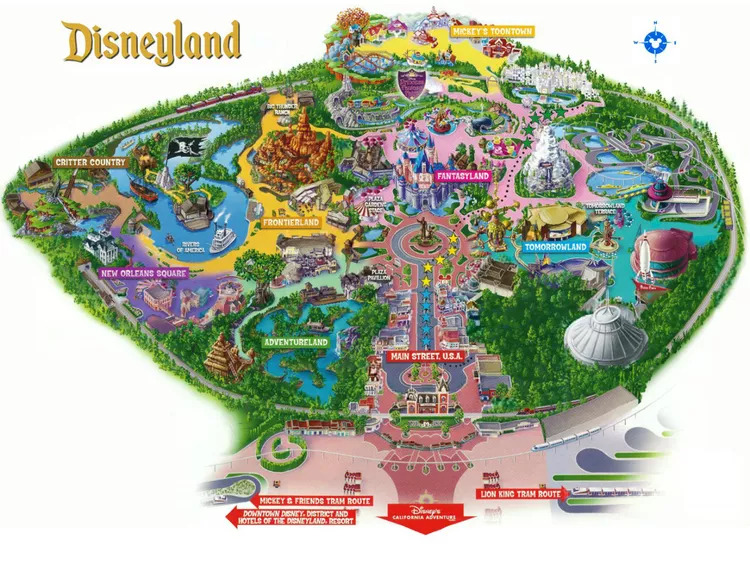
Part of this is age. Tomorrowland is very much stuck in an idea of tomorrow from the 1960’s and has struggled to update (more on that in Defunctland’s excellent video on the subject.)
But it’s also because the boundaries between those lands were pretty loosey goosey to begin with, and they’ve only gotten worse with time.
See, for those who have never been, there’s never really any indicator that you’ve left one land and entered another aside from a change in the decor. And that change is, I’ll be honest, a little vague. There’s not a lot of daylight between Adventureland and Frontierland, or between Main Street USA and New Orleans.
This problem has only gotten worse as Disney has grown. It’s not just the need to find places to crowbar in Star Wars and Marvel; it’s their own original films.
Disney parks recently redid Splash Mountain, due to the… uncomfortable racial overtones of its originating film “Song of the South”.
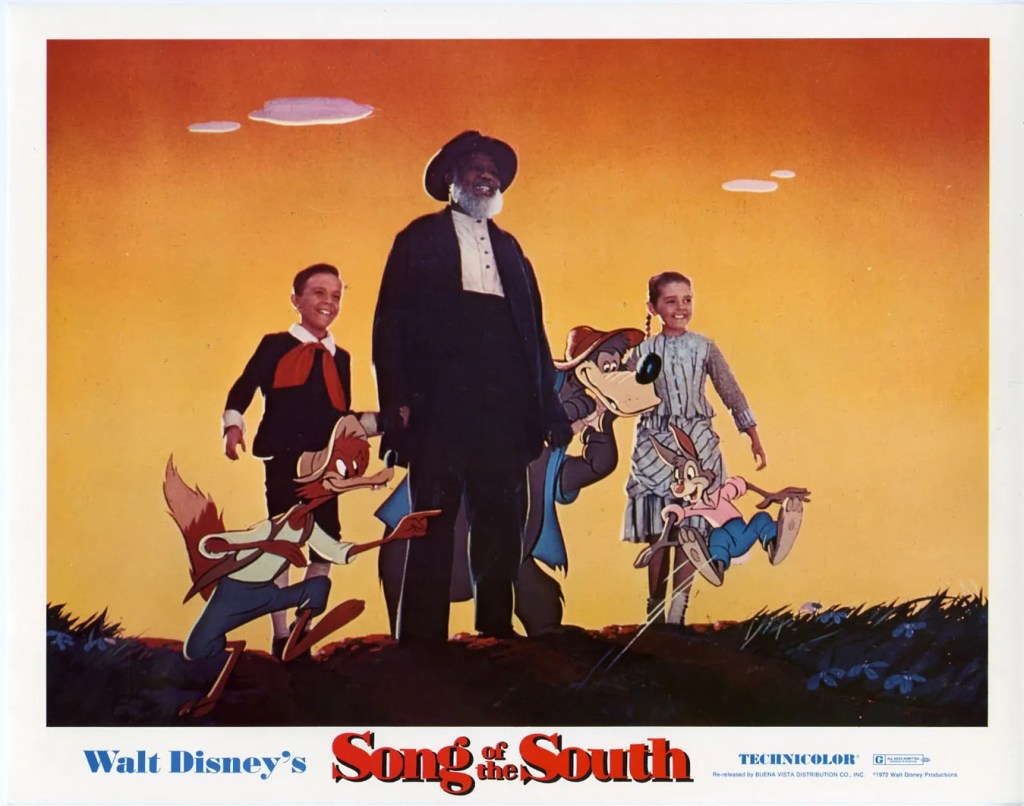
Presumably wanting to swing in the opposite direction, they updated the ride to follow “The Princess & the Frog”, Disney’s first movie to feature a Black princess. Only a small problem. “The Princess & the Frog” takes place in New Orleans.
Splash Mountain is in what used to be called “Critter Country”. NOT New Orleans Square. Which means Tiana’s, the New Orleans-themed restaurant, is in an entirely different “world” than the city the movie spent so much time honoring.
To fix this, they had to rename the entire area to “Bayou Country”, which feels like putting a band-aid on top of a band-aid.
So all the hard work the Imagineers do to make Disney feel immersive is lost in the wash. Everything bleeds together into one kind of vague, muddled “Disney” jumble that becomes even more bland and confused as Disney stuffs more and more IP in.
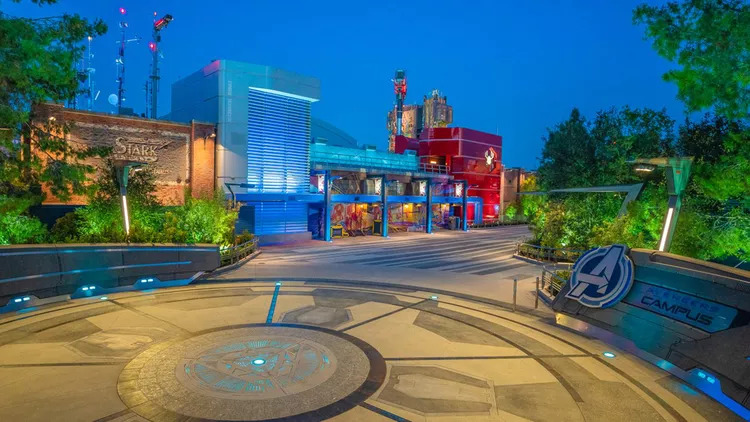
That feeling of immersiveness, of truly losing yourself in a world, is lost because you never truly feel like you’re entering a specific world and place.
Lessons
Filmmakers of all stripes think about transitions a lot. They have their own dialogue vocabulary, with each transition having its own effect.
Smash cuts can shock or disorient.
Fades and dissolves linger on an image and stretch out the passage of time.
Match cuts draw comparison between unrelated ideas and heighten metaphors.
All these moves accomplish different things, but they all provide structure to stories as they move from concept to concept. Without that, your story can devolve into a chaotic, formless mess without boundaries.
And sometimes that’s what you want! 1917 is framed as a single, unbroken take to simulate the heightened tension and chaos of World War 1.
The point is that every one of these moves is intentional. Specifically chosen to create a desired effect. In much the same way, Epic Universe designers intentionally created the portals to heighten your immersion into a specific world.
Fail to be intentional, and you get…
This is ultimately where the early Disney parks struggle – they’ve lacked intentionality in their updating. In many ways, this is not entirely the Mouse’s fault. The original parks are old, updates are expensive, and there’s a strong push to get new IP and rides in far more than something like a set dressing overhaul or installing gates.
Then again, if we consider Galaxy’s Edge and the Galactic Star Cruiser Hotel, maybe the problem is a little deeper than I first thought.
More to come. Believe me, two days at Epic Universe gave me an entire year’s worth of things to think about.
“You wonder next which path to chart, the answer lies within your heart”
 Patrick Regan
Leave a comment